
Water Damage in Murrieta, CA & Surrounding Areas
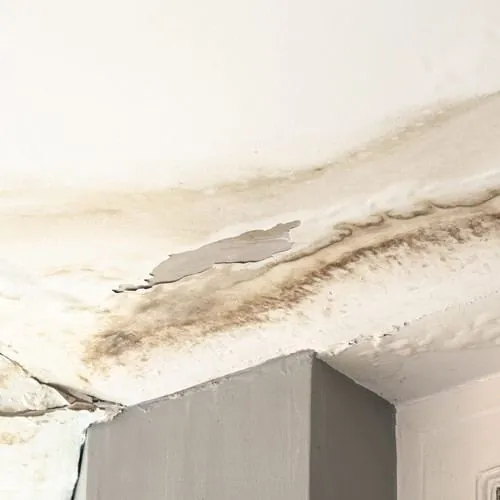
Stop the Source First
Water damage repair starts with a plumbing question: where is it coming from, and how fast can it be made to stop? Fans and dehumidifiers do nothing while a line is still leaking into the wall. Our job is the source: find the leak, stop it, repair the plumbing that caused it, and set the home up so it does not happen again. For the drying and restoration side we also offer flood restoration.
The Kind of Calls We Handle
From our own recent service records: in Wildomar, a cracked PEX line behind a water heater was leaking through the ceiling below; we located it and repaired it before the damage spread further. In Lake Elsinore, a cold water slab leak was pushing water up through the floor and along the baseboard behind a toilet, found with emergency leak detection. In Corona, we made an emergency repair on a leaking line under the home. In every one of those, the difference between a repair bill and a remodel was how quickly the water stopped.
If Water Is Coming In Right Now
Shut off the main valve, usually at the front hose bib or the meter box near the street, then call us at 866-693-2645. We answer 24 hours a day. While you wait, move what you can out of the wet area and get photos for your records. Our guide to the first minutes of a plumbing emergency walks through it step by step.
Preventing the Next One
Twice in recent months we have installed automatic protection for exactly this risk. In Menifee we fitted a Moen Flo system that monitors water usage around the clock and shuts off the main supply on its own when it detects a leak; some insurers ask for exactly this kind of device. In Warner Springs we installed a three-quarter inch Moen emergency shut-off valve so the homeowner can kill the water instantly when something lets go. If your home has had one leak already, either device is cheap insurance against the next one.
Related: plumbing leak repair, slab leak repair and how to detect water leaks.
Frequently Asked Questions
Does homeowners insurance cover water damage?
Policies differ, but insurers commonly treat a sudden failure, like a burst line, differently from slow seepage that went unaddressed. Acting fast and documenting the source helps either way. We describe exactly what failed and what we repaired, which is the detail an adjuster wants to see. Photograph everything before cleanup starts: the source, the standing water and each affected room, with timestamps. The distinction insurers draw is usually about suddenness, so evidence that a fitting failed at a moment in time, rather than seeped for months, does real work in a claim, and our repair documentation slots straight into that file.
Can a leak inside a wall dry out on its own?
No. Even after the plumbing is fixed, a wall cavity that got soaked holds moisture where air cannot reach it, and that is where mold starts. Stopping the leak is step one; verifying the structure is actually dry is step two. Do not skip the second step. Building materials hold water in exactly the wrong ways: drywall wicks it upward well past the visible stain, insulation presses it against framing, and a painted surface can read dry while the cavity behind it stays saturated for weeks. A moisture meter reading through the affected area is how you know the difference instead of hoping.
What is a leak shutoff device?
A valve on your main line that closes automatically. A monitoring system like the Moen Flo watches usage patterns and shuts the water off when flow looks like a leak, even a small one. We install and configure them, and they matter most in homes that sit empty during the day. It is the plumbing equivalent of a smoke detector that also puts the fire out. The monitoring catches the big failure, a burst hose or a split line, within moments, but it also flags the slow anomalies, a toilet running in the middle of the night or a drip that never stops, that would otherwise surface as a high bill or a stain.