Water Softener Installation
Soft Water Made Simple for Your Home
Hard water causes scale, stains, and appliance wear. A water softener solves these problems at the source. Family Plumbing, Heating & Air provides professional water softener installation in Murrieta, CA, and surrounding areas. Our team installs systems that protect plumbing, improve water quality, and support daily comfort. We explain each step and complete each job with care. Homeowners get clear results they can feel and see every day. Schedule services today by calling 866-693-2645.
What a Softener Does, Mechanically
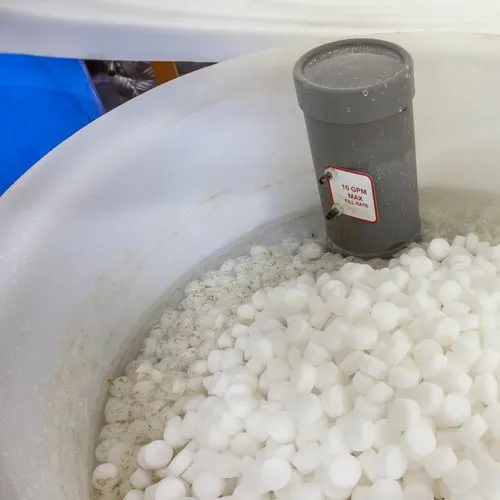
A water softener is an ion exchanger, not a filter. Hard water flows through a tank of resin beads charged with sodium ions; the calcium and magnesium that make water hard trade places with the sodium and stay behind on the resin, and the water leaves soft. On a schedule, the system regenerates, flushing the captured minerals to the drain with brine from the salt tank and recharging the resin. That cycle is why softeners actually eliminate scale rather than just changing its behavior, and why they need salt but almost no other attention.
Installation quality decides whether you get those results. The softener has to sit on the main line downstream of the pressure regulator, with a bypass so the system can be serviced without shutting water to the house, a proper drain connection with an air gap, and hose bibs left hard so the irrigation is not running through your salt supply. Sizing is a calculation from your water hardness and household usage, not a shelf grab; an undersized unit regenerates constantly and an oversized one wastes money up front.
We test your water, size the system to the numbers, and plumb it to be serviceable for the long haul. Compare approaches on our hard water solutions page, or start with a water test at 866-693-2645.
What a Water Softener Does for Your Home
A water softener removes excess minerals from hard water. This process reduces buildup inside pipes and appliances. Soft water helps soap work better and leaves fewer spots on dishes and fixtures. It also helps extend the life of water heaters, washing machines, and plumbing lines.
Our water softener installation process starts with a review of your water supply and usage. We help you choose a system that fits your household size and water demand. After installation, we test the system to confirm proper operation.
Benefits of a professionally installed water softener include:
- Less scale on faucets and shower doors
- Longer appliance lifespan
- Softer skin and hair after bathing
- Cleaner laundry with less detergent
- Improved water flow through pipes
We install modern systems that work with your existing plumbing. Our team places the unit for easy access and future service. We also explain basic maintenance so you feel confident using your system. With water softener installation in Murrieta, CA, and surrounding areas, homeowners gain comfort and peace of mind.
Contact Us
If hard water affects your home, now is the time to act. Contact Family Plumbing, Heating & Air to schedule water softener installation in Murrieta, CA, and surrounding areas. Our team will answer your questions and set a clear plan. Call 866-693-2645 or message us today to get started with better water at home.
Weighing a softener against filtration or reverse osmosis before you commit? Our softener vs. filter vs. reverse osmosis comparison lays out what each one actually solves.
Frequently Asked Questions
Do I actually need a water softener in the Murrieta area?
Water throughout the Murrieta, Temecula, and Menifee area is hard, which is why scale on fixtures, spotting on glassware, dry skin, and shortened water heater life are such common complaints locally. A softener addresses the cause rather than the symptoms. The mineral content arrives with the supply itself, drawn from sources that pass through mineral-heavy ground, so no neighborhood in the valley escapes it. A hardness test on your actual tap water is the honest starting point: it confirms the need, and it is also the number that sizes the equipment correctly rather than by guesswork.
What does hard water actually do to a home?
Dissolved calcium and magnesium precipitate out as scale. That scale coats water heater elements and reduces efficiency, narrows pipe interiors over time, shortens the life of dishwashers and washing machines, and leaves spotting on fixtures and glassware. It also makes soap harder to rinse. The costs are gradual, which is why hard water gets ignored until an appliance fails early. A heater working through a scale layer runs longer for the same hot water, and every wash cycle uses more detergent than soft water would need, so the expense hides inside utility bills rather than arriving as one repair.
What is the difference between a softener and a whole house filter?
A softener removes hardness minerals through ion exchange. A whole house filter targets sediment, chlorine, taste, and odor. They solve different problems and are often installed together. The confusion is understandable because both are tanks plumbed into the main line, but the chemistry is entirely different: exchange resin versus filter media. The symptom tells you which one you need. White scale and spotting point to the softener; taste, odor or visible sediment point to filtration. Homes with both complaints run both, softener first in line. If the goal is protecting a new water heater, the softener is the half that does it.
How much maintenance does a softener need?
Most salt based systems need salt added every one to two months depending on household size and water use, plus an occasional check of the brine tank and settings. We go over the routine at installation. Salt consumption is also a health check for the system: usage that suddenly stops usually means a salt bridge, a hard crust over the tank keeping salt from reaching the water, which is cleared in minutes once spotted. Beyond that, an occasional settings review as household size changes keeps regeneration matched to actual use instead of a years-old assumption.
See water treatment systems for how softening, filtration and reverse osmosis differ.