
Reverse Osmosis Drinking Water Systems in Murrieta, CA & Surrounding Areas
Drinking Water Is Its Own Problem
Valley water is hard and carries a high load of dissolved solids. A water softener protects your plumbing and appliances from scale, and carbon filtration cleans up taste and chlorine, but neither removes what is actually dissolved in the water. That is the job of reverse osmosis: forcing water through a membrane fine enough that dissolved solids stay behind, and sending clean water to a dedicated faucet at the sink. For how RO fits alongside softening and whole-house filtration, see our overview of water treatment systems.
What an Under-Sink RO System Looks Like
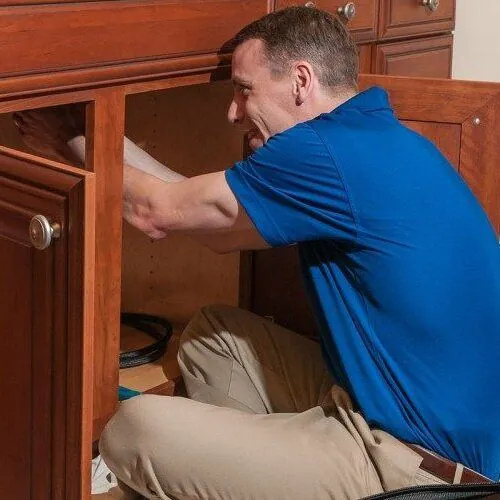
A compact stack in the sink cabinet: sediment and carbon prefilters that protect the membrane, the membrane itself, a small storage tank so filtered water is ready when you want it, a polishing filter for taste, and a separate faucet at the sink. Ice makers and refrigerator dispensers can usually be fed from the same system, which is where an RO earns its keep daily.
The Honest Details
Two things worth knowing before you buy. First, RO systems send some water down the drain as part of how the membrane cleans itself; modern systems are far more efficient than the old ones, but the ratio is not zero. Second, RO removes minerals indiscriminately, including the calcium and magnesium that give water body, which is why some people find RO water flat. A remineralization stage fixes the taste if that bothers you. We would rather tell you both up front than have you find out later.
Maintenance and Pairing
Prefilters and the polishing filter want changing roughly once a year, and the membrane itself every two to five years depending on your water and usage. On water as hard as ours, a softener upstream dramatically extends membrane life, which is why we often quote the two together. We install, service and re-filter RO systems across the valley. Call 866-693-2645 for a quote or a filter service on an existing system.
Related: water softener installation, whole-house water filtration and hard water solutions.
Deciding whether RO, a softener or whole house filtration comes first? Start with our water treatment comparison guide.
Frequently Asked Questions
What is the difference between RO and a whole-house filter?
A whole-house filter treats all the water entering the home, mainly for chlorine, taste and sediment, at full flow. RO is a point-of-use system that removes dissolved solids for the water you drink and cook with. Most homes that want both protection and top drinking water quality end up with a combination. The scale of each system explains the difference: a whole-house unit must treat every gallon at full household flow, so it targets the contaminants that matter at that scale, while RO works slowly through a membrane fine enough to reject dissolved solids, storing the result in a small tank for the one faucet that needs it.
Does reverse osmosis waste water?
Some, yes. The membrane flushes rejected solids down the drain as it works. Modern systems run much leaner ratios than older ones, and a softener upstream reduces the rejection load on hard water. We will tell you the real ratio for the specific system we quote. The drain water is not a defect; it is how the membrane keeps itself from fouling, carrying the rejected minerals away instead of letting them cake the surface. Ratios matter when comparing systems, because an efficient, well matched unit sends several times less to the drain per filtered gallon than an old or poorly configured one.
Does RO remove healthy minerals?
It removes minerals across the board, including calcium and magnesium. Nutritionally you get those from food, but they do affect taste, which is why remineralization stages exist. If you have tried RO water and found it flat, that stage is the fix. The remineralization stage is a small cartridge that adds a measured amount of calcium and magnesium back after the membrane, restoring the crisp taste most people expect from good water. It is an easy retrofit to an existing system too, so trying RO first and adding the stage later is a perfectly reasonable path.